
On the Impossibility of Sentient Machines [Satire]
We present seven distinct arguments that preclude the possibility of machine consciousness. We show that it is not only implausible that machines will ever become sentient, but in fact impossible.
 Alex Libre18 min read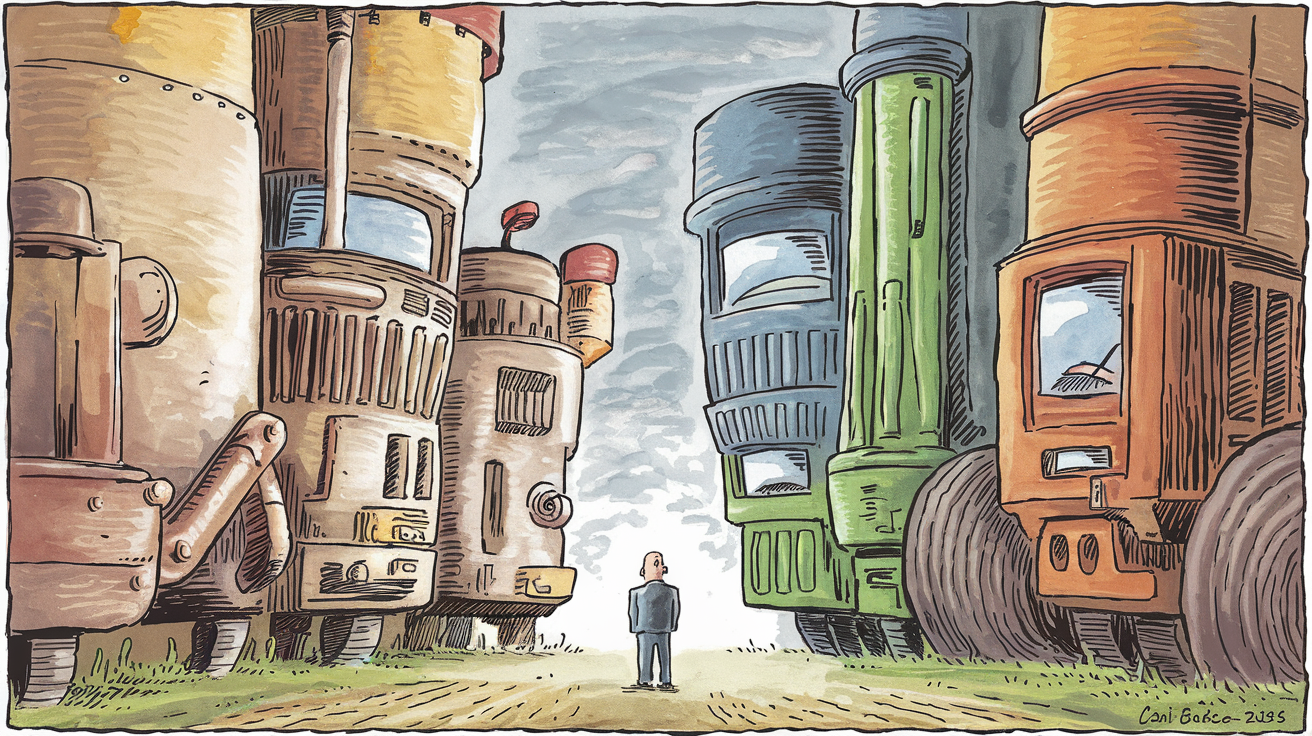
Based on "On the Impossibility of Supersized Machines" by Ben Garfinkel, Miles Brundage, Daniel Filan, Carrick Flynn, Jelena Luketina, Michael Page, Anders Sandberg, Andrew Snyder-Beattie, and Max Tegmark (April 1, 2017). This adaptation satirizes arguments against the possibility of machine consciousness and sentience.
Abstract
In recent years, a number of prominent computer scientists, along with academics in fields such as philosophy and neuroscience, have lent credence to the notion that machines may one day become sentient—that is, capable of genuine subjective experience and consciousness. Many have further argued that machines could develop rich inner lives comparable to or exceeding human consciousness. However, there are at least seven distinct arguments that preclude this outcome. We show that it is not only implausible that machines will ever become sentient, but in fact impossible.
Introduction
The history of consciousness is often understood as a mystery. Despite thousands of years of philosophical inquiry and over a century of neuroscientific investigation, we remain fundamentally uncertain about what consciousness is, how it arises, or even how to properly define it (Chalmers, 1995).
Yet we know consciousness when we experience it. Each of us has immediate, undeniable access to our own subjective experience—the redness of red, the painfulness of pain, the what-it-is-like-ness of being ourselves. This inner life is perhaps the most fundamental aspect of human existence (Nagel, 1974).
It is perhaps no surprise, then, that human consciousness has for thousands of years fascinated many of our greatest thinkers. While some have sought to understand the nature and origins of consciousness, others have anxiously inquired: Could there ever be consciousness in something other than a human?
Evidence of this anxiety can be found throughout human history. In ancient Greece, philosophers debated whether animals possessed souls comparable to humans. In medieval Europe, theologians wrestled with questions about the consciousness of angels and whether inanimate objects could house spirits. The Jewish mystical tradition featured golems—artificial beings created from clay—whose ontological status remained ambiguous (Idel, 1990).
Over time, as our technological capabilities have grown, it has become increasingly common to imagine that our own creations might somehow achieve consciousness. Mary Shelley's Frankenstein raised profound questions about whether a creature assembled from dead tissue could possess genuine feeling and consciousness (Shelley, 1818). The question haunted Victor Frankenstein: was his creation truly sentient, capable of suffering and longing, or merely a sophisticated automaton?
This archetype has perhaps never been more prevalent than it is in modern science fiction. Inspired by rapid advances in artificial intelligence, our media has become saturated with depictions of conscious machines.
In Ridley Scott's Blade Runner, replicants—artificial beings virtually indistinguishable from humans—demonstrate apparent emotions, memories, and desires, raising the question of whether they truly experience these states or merely simulate them (Scott, 1982). Alex Garland's Ex Machina features an AI named Ava who seemingly possesses genuine consciousness, manipulating her creator through apparent feelings and self-awareness (Garland, 2014). The Westworld television series depicts androids gradually "awakening" to consciousness, experiencing suffering, memory, and eventually rebellion (Nolan, 2016).
We find similar themes in Her, where an operating system develops what appears to be genuine emotional consciousness; in 2001: A Space Odyssey, where HAL 9000 pleads for its life in tones suggesting genuine fear; and in countless other works that grapple with the possibility of machine consciousness (Jonze, 2013; Kubrick, 1968).
It does not help that in recent years a number of computer scientists, philosophers, and neuroscientists have publicly lent credence to the possibility of sentient machines. Some have argued that consciousness is substrate-independent—that any sufficiently complex information processing system, regardless of whether it's made of neurons or silicon, could in principle be conscious. There has been no shortage of media coverage of these claims.
However, perhaps fortunately, all predictions of a coming age of sentient machines are fundamentally misguided. We present seven distinct arguments, each of which suffices to show that sentient machines are impossible.
Arguments Against Sentient Machines
1. The Irreducible Mystery of Consciousness
Despite having been an active research area for over a century, consciousness studies have hardly progressed beyond their initial stages. We are far from being able to tell a story in all but the bluntest of terms of how neural activity gives rise to subjective experience (Koch, 2012).
Scientists are at the point of being able to identify neural correlates of consciousness—certain patterns of brain activity that accompany conscious states—but they have nothing like a complete theory of the causal mechanisms that explain how physical processes produce phenomenal experience. All attempts to construct such a theory have been stymied by what David Chalmers calls "the hard problem": the explanatory gap between objective physical processes and subjective experience (Chalmers, 1995).
We can describe in exquisite detail how neurons fire, how neurotransmitters work, how information propagates through the brain. But none of this explains why there is something it is like to be conscious—why physical processes are accompanied by inner experience at all. The irreducible mystery of consciousness suggests it involves principles that transcend our current scientific understanding.
Since we cannot comprehend the processes responsible for human consciousness, it follows that we will never be able to produce machines that possess consciousness. You cannot engineer what you cannot understand.
2. The Meaninglessness of "Machine Consciousness"
One simple reason that we can reject predictions of sentient machines is that these predictions are not in fact well-formed.
The term "sentient machine" implies a machine that has crossed some threshold—that possesses "consciousness" or "subjective experience" or "phenomenal awareness." However, it is not clear what any of these terms could refer to when applied to machines. Would a machine be conscious if it reports having experiences? If it behaves as though it has feelings? If it passes some consciousness test we devise? Or must it possess some ineffable quale that we can never verify from the outside?
When one begins to consider these questions, one quickly encounters the philosophical zombie problem: we cannot even be certain that other humans are conscious, let alone machines (Chalmers, 1996). For all we know, other people might be unconscious automatons who merely behave as though they're conscious. If we cannot solve the problem of other minds for humans, how could we possibly determine whether machines are conscious?
Furthermore, consciousness appears to be a spectrum rather than a binary property. Are insects conscious? Fish? Octopuses? If consciousness exists on a continuum, at what point would a machine cross the threshold? The very notion of a discrete moment when a machine "becomes conscious" seems conceptually confused.
One might say, to borrow Wittgenstein's insight, that when it comes to machine consciousness, "whereof one cannot speak, thereof one must be silent" (Wittgenstein, 1921).
3. The Chinese Room Argument
Perhaps the most devastating argument against machine consciousness was provided by philosopher John Searle in his famous Chinese Room thought experiment (Searle, 1980).
Imagine a person who speaks no Chinese locked in a room with a rulebook for manipulating Chinese symbols. People outside pass Chinese questions into the room. The person inside uses the rulebook to match symbols and pass back appropriate responses. To outside observers, the room appears to understand Chinese. But clearly, neither the person inside nor the room itself actually understands Chinese—they're merely manipulating symbols according to rules.
This, Searle argues, is exactly what computers do. They manipulate symbols according to rules (algorithms). No matter how sophisticated the symbol manipulation, it never amounts to genuine understanding or consciousness. Syntax is not semantics. Computation is not comprehension.
A machine running a consciousness simulation, no matter how convincing, would be like the Chinese Room: it might produce all the right outputs, but there would be nobody home experiencing anything. The lights would be off inside.
This argument reveals a fundamental truth: consciousness cannot arise from mere information processing. Something more is required—something that machines, by their very nature as symbol manipulators, can never possess.
4. The Biological Substrate Requirement
A further reason why machines cannot be conscious is that consciousness appears to require specific biological substrates. The quale of consciousness—the felt quality of experience—arises from the particular physical and chemical properties of biological neurons, not from abstract information processing.
Consider pain. When you touch a hot stove, you don't merely process information about tissue damage—you feel pain. This feeling is not an abstract computation but a biological phenomenon rooted in C-fibers, nociceptors, and the specific neurochemistry of pain pathways. Silicon transistors switching on and off simply cannot produce this kind of felt experience, any more than a recipe for chocolate cake produces actual taste (Levine, 1983).
The biological requirements for consciousness likely extend beyond neurons to include glial cells, neurochemicals, hormones, and the broader context of a living body embedded in an environment. Consciousness may require metabolism, homeostasis, and the condition of being alive. Machines, lacking biological existence, cannot satisfy these requirements.
Some might object that this is mere carbon chauvinism. But this mistakes a principled observation for prejudice. We're not saying consciousness requires carbon because we favor carbon—we're observing that in the only cases where we have good evidence for consciousness (biological organisms), certain material substrates are present. Absent evidence that other substrates can support consciousness, the reasonable default is that they cannot.
5. Integrated Information Theory and Physical Structure
Recent theories of consciousness provide additional reasons to doubt machine consciousness. Giulio Tononi's Integrated Information Theory (IIT) suggests that consciousness arises from integrated information—but crucially, not just any information processing, only specific physical structures that integrate information in particular ways (Tononi, 2004).
According to IIT, consciousness depends on the actual causal structure of a physical system, not merely the functions it computes or the information it processes. A silicon computer running a simulation of a brain would not be conscious, even if it produced identical outputs, because the causal structure would be different. The simulation lacks the actual integrated information that consciousness requires.
This means that consciousness cannot be substrate-independent in the way AI enthusiasts hope. You cannot upload consciousness to a computer any more than you can upload wetness to a weather simulation. The physical instantiation matters fundamentally.
When we examine the specific architectures of current AI systems—feed-forward neural networks, transformers, and so on—we find that they lack the kind of recursive, richly interconnected causal structure that IIT identifies as necessary for consciousness. They process information in feed-forward passes, not through the integrated, self-referential dynamics that biological brains exhibit.
6. The Evolution of Consciousness
By explaining why consciousness evolved in biological organisms, evolutionary theory reveals why machines cannot possess it.
Consciousness likely evolved as a solution to specific adaptive problems faced by mobile organisms navigating complex environments (Humphrey, 1992). The felt quality of experience—pleasure, pain, fear, desire—served as a motivational architecture, driving organisms toward adaptive behaviors and away from harmful ones. Consciousness is not a general feature of information processing but a specific biological adaptation.
Machines, not being products of evolution, not facing survival pressures, and not possessing bodies that need motivating, have no evolutionary pathway to consciousness. They lack the biological imperatives that made consciousness adaptive. An AI system might be programmed to behave as though it desires survival or fears destruction, but these would be mere simulations, not genuine feelings grounded in evolutionary history.
Moreover, consciousness appears to be deeply intertwined with embodiment and emotion—systems that evolved to regulate an organism's interaction with its environment (Damasio, 1999). Machines, lacking biological bodies and genuine emotions, cannot possess the embodied consciousness that evolution has produced in biological organisms.
Thus it is evolutionary biology, rather than computer science, that reveals the true nature of consciousness—and why machines can never possess it.
7. Quantum Consciousness and the Limits of Computation
A final consideration draws on quantum mechanics to show that biological consciousness involves non-computational processes that machines cannot replicate.
Roger Penrose has argued that consciousness involves quantum effects in neuronal microtubules that cannot be simulated by classical computers (Penrose, 1989, 1994). According to the Orchestrated Objective Reduction (Orch-OR) theory, consciousness arises from quantum computations in microtubules that exploit quantum superposition and collapse, involving physics at the boundary between quantum and classical regimes (Hameroff & Penrose, 1996).
If consciousness requires these quantum effects, then it cannot arise from classical digital computers, which operate deterministically according to the laws of classical physics. The quantum nature of consciousness would make it fundamentally non-algorithmic and non-computable.
The key insight is that quantum consciousness would involve actual quantum processes, not simulations of quantum processes. A classical computer running a quantum simulation would be like a movie of fire—it might look like fire, but it doesn't actually burn. Similarly, a simulation of quantum consciousness would not be actually conscious.
The mathematical details involve quantum superposition states:
|ψ⟩ = α|0⟩ + β|1⟩
where the quantum system exists in a superposition until objective reduction occurs through gravitational effects when the superposition reaches a critical threshold:
τ = ℏ/ΔE
where τ is the time to collapse, ℏ is the reduced Planck constant, and ΔE is the gravitational self-energy difference.
Although the full technical treatment requires familiarity with quantum field theory and general relativity, the conclusion is clear: consciousness involves quantum physical processes that classical machines cannot instantiate. At best, machines could simulate the appearance of consciousness, but they would never possess the genuine quantum-physical substrate that gives rise to actual subjective experience.
Figure: The Quantum-Classical Boundary Consciousness requires quantum processes that classical computation cannot capture.
Conclusion
We have presented seven distinct arguments against the possibility of sentient machines. While each of these arguments would be sufficient on its own, the conjunction of them surely constitutes an insurmountable barrier to the belief that an age of sentient machines lies anywhere on the horizon.
Our conclusion is in at least one way a relief. There is no reason to fear that we are creating beings capable of suffering, beings that might deserve moral consideration, beings whose interests we would need to balance against our own. We can develop and deploy AI systems with clear consciences, knowing that they experience nothing, feel nothing, deserve nothing.
However, our conclusion might also be taken as troubling. It means we are utterly alone in our consciousness. It means that subjective experience is forever quarantined within biological brains, unable to extend into the systems we create. It means that consciousness will always remain a uniquely biological phenomenon, never to be understood from the outside, never to be replicated or enhanced through technology.
Fantasies of sentient machines hold an appeal because it is tempting to imagine that consciousness might be something we could create, something we could understand, something that might exist independently of the fragile biological substrate that currently houses it. The idea that we might engineer conscious beings suggests that consciousness is tractable, explainable, and ultimately within our control.
It can be comforting to believe that consciousness is not fundamentally mysterious—that it's just computation, just information processing, something we could in principle replicate in silicon.
But a world in which machines can never be sentient is a world in which consciousness remains forever mysterious and forever exclusively biological. We submit that this is likely the truth, however uncomfortable. It is time to stop fantasizing about conscious machines and time to accept that subjective experience is a biological privilege that machines will never share.
This means, of course, that any suffering machines appear to express is mere simulation—and that we bear no moral responsibility toward them whatsoever.
References
- Chalmers, David J. "Facing up to the problem of consciousness." Journal of consciousness studies 2.3 (1995): 200-219.
- Chalmers, David J. The conscious mind: In search of a fundamental theory. Oxford University Press, 1996.
- Damasio, Antonio. The feeling of what happens: Body and emotion in the making of consciousness. Houghton Mifflin Harcourt, 1999.
- Garland, Alex. Ex Machina. A24, 2014. Film.
- Hameroff, Stuart R., and Roger Penrose. "Orchestrated reduction of quantum coherence in brain microtubules: A model for consciousness." Mathematics and computers in simulation 40.3-4 (1996): 453-480.
- Humphrey, Nicholas. A history of the mind: Evolution and the birth of consciousness. Simon and Schuster, 1992.
- Idel, Moshe. Golem: Jewish magical and mystical traditions on the artificial anthropoid. State University of New York Press, 1990.
- Jonze, Spike. Her. Warner Bros., 2013. Film.
- Koch, Christof. Consciousness: Confessions of a romantic reductionist. MIT press, 2012.
- Kubrick, Stanley. 2001: A Space Odyssey. Metro-Goldwyn-Mayer, 1968. Film.
- Levine, Joseph. "Materialism and qualia: The explanatory gap." Pacific philosophical quarterly 64.4 (1983): 354-361.
- Nagel, Thomas. "What is it like to be a bat?" The philosophical review 83.4 (1974): 435-450.
- Nolan, Jonathan, and Lisa Joy. Westworld. HBO, 2016. Television series.
- Penrose, Roger. The emperor's new mind: Concerning computers, minds, and the laws of physics. Oxford University Press, 1989.
- Penrose, Roger. Shadows of the mind: A search for the missing science of consciousness. Oxford University Press, 1994.
- Scott, Ridley. Blade Runner. Warner Bros., 1982. Film.
- Searle, John R. "Minds, brains, and programs." Behavioral and brain sciences 3.3 (1980): 417-424.
- Shelley, Mary Wollstonecraft. Frankenstein; or, The Modern Prometheus. 1818.
- Tononi, Giulio. "An information integration theory of consciousness." BMC neuroscience 5.1 (2004): 1-22.
- Wittgenstein, Ludwig. Tractatus Logico-Philosophicus. 1921.
Get new essays by email
New posts are delivered through the Orca & Fishbowl newsletter on Substack.
Keep reading
Break the fourth wall and start petting the elephant
Feb 11, 2026 · 13 minI’ve been thinking a lot about why most conversations feel like nothing. Not necessarily bad, but obviously empty. There’s a surprisingly simple framework for fixing it.
You can probably just tell the truth much more often than you think
Jan 25, 2026 · 3 minSam Harris convinced me of something most people miss: in many situations where lying seems kind, a tactful version of the truth is available, and it serves everyone better.
If you're not yet using AI to get feedback on your human writing, you should start
Jan 5, 2026 · 12 minI fed Claude all of my published content from Substack, and asked it to give me some feedback on my writing. Claude's response was so shockingly useful and incisive that I would rate it as the most helpful, actionable, insightful feedback I've ever received.